



Magazine: Fall 2011 | Volume 18, No. 1
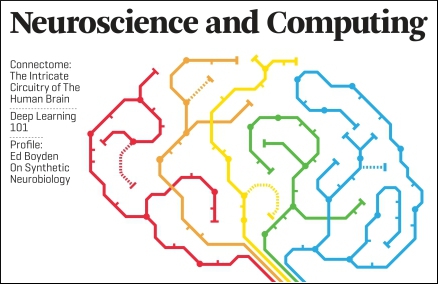
Your brain is a wonderful and powerful thing—it is intricately involved with everything you do and everything that makes you who you are. As the interests of computer scientists gravitate toward the brain, entirely new questions emerge. Can we monitor the brain while writing a paper, playing a game, or performing a musical piece? Can we study how the brain learns and use it to influence and improve our own algorithms? Can we create computer applications that are attentive to our situational cognitive needs?
Download
- Digital Edition web-based magazine available for subscribers – sign in
- PDF via ACM’s Digital Library


DEMONSTRATION SESSION: INIT: issue introduction
Neuroscience and computing
By Evan M. Peck, Erin T. Solovey




SECTION: Features
The connectome project
Using neuroimaging, researchers are succesfully mapping neural connectivity and in the process creating vivid "brainbows."
By Amelio Vázquez-Reina, Won-Ki Jeong, Jeff Lichtman, Hanspeter Pfister
The sensorium
Research teams from around the world reflect on their brain sensing setups.
By Evan M. Peck, Erin T. Solovey
Trends in BCI research
It would be wise for stakeholders to organize and establish guidelines in order to prevent BCI from becoming a passing fad.
By Brendan Allison

Profile Ed Boyden
The synthetic neurobiologist
By Robert J. Simmons

Subliminal computing
Can information presented below the threshold of consciousness be used to provide support to the users of interactive computer systems?
By Ryan Kelly
From Neural Networks to Deep Learning
Pondering the brain with the help of machine learning expert Andrew Ng and researcher-turned-author-turned-entrepreneur Jeff Hawkins.
By Jonathan Laserson